

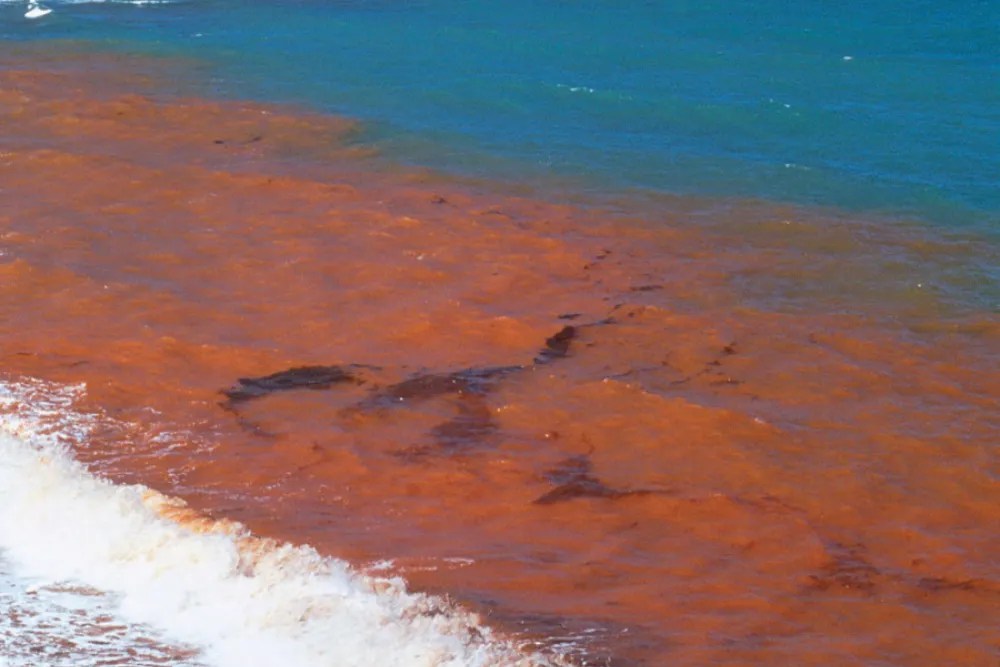
This article will mainly focus on red tide in Florida, but some of this information is universally prevalent.
What is Red Tide? Red Tide, also known as Harmful Algal Blooms (HABs), is caused by microscopic organisms called algae that rapidly grow/bloom causing the red discoloration in the water.
What are some causes of Red Tide? Specifically when speaking about Florida, there are a couple of main causes of Red Tide, but this is not an exhaustive list.
- Runoff from sewage treatment plants and fertilizer. The fertilizer and sewage treatment plants runoff acts as “food” for the algae, making them grow very quickly thus causing red tide.
- Air pollution. Specifically from power plants, factories, auto-mobiles, and mining dust. The pollution acts as excess nutrients causing the algae to grow rapidly which can cause red tide.
This study from 2022 found a link between nitrogen runoff and more intense red tide along the gulf coast of Florida. The study also mentions that fertilizers and sewage are high in nitrogen. Unfortunately, the study isn’t fully open access, but you are able to read some of it.
What are the risks of Red Tide to Humans? Red Tide poses many health risks to humans, especially those with respiratory issues. Some symptoms people may experience from breathing in the red tide toxin is coughing, sneezing, runny nose, sore throat, itchy or watery eyes, and wheezing. These symptoms could be even worse if you have a chronic respiratory condition such as asthma, COPD, or emphysema. People should not swim during a Red Tide event due to the risks mentioned previously plus you can experience skin and eye irritation. Additionally, eating food contaminated with red tide can pose very serious health risks to humans. It is called Paralytic Shellfish Poisoning and it is not advised to eat food that is known or could have been contaminated with red tide. For example, it is advised to avoid eating local shellfish during a local red tide event.
What are the risks of Red Tide to Marine Life? Illness and death are the biggest threat to marine animals including fish, sea turtles and marine mammals. One research study found that manatees exposed to red tide had diminished lymphocyte production, which could have a lethal effect in immunocompromised manatees.(Walsh et al., 2015) Lymphocytes are part of your white blood cells that help fight off infection. The research study will be cited and linked below. Marine mammals can also be infected by inhaling the toxins and/or by eating contaminated prey items. Birds and sea turtles are usually affected by eating contaminated prey items and can die as a result.
What are the risks of Red Tide on coral reefs? If you didn’t know, coral reefs have been declining worldwide for years. This is due to a multitude of factors, most notably climate change, but red tide also has a negative impact on coral reefs. A study from 2020 showed that coral reefs exposed to red tide experienced cell stress. Duration of exposure and intensity of the red tide are two variables that determine the severity of the effects of the corals. Cell stress could lead to coral bleaching events. There will be more on coral reefs and bleaching events in another post coming soon. I’ve linked the study below if you want to read it.
Is climate change involved in Red Tide? Climate change is acting more as a catalyst for red tide. With the climate changing, it can make red tide occur more often and be more intense, but based on current research, climate change is not directly causing red tide.
What can we do to prevent Red Tide? Here are some ways we can be good samaritans and help prevent red tide.
- Limit or eliminate the use of fertilizers
- Dispose your garbage properly.
- Pick up your pet’s waste and dispose of it properly.
- Conserve water. For example, turning off the water while you’re brushing your teeth. This helps by reducing wastewater thus reducing chemicals from entering our oceans that can cause red tide.
As I’m sure you can see, human activities are a cause of red tide. From runoff to pollution, our actions significantly contribute to the nutrient enrichment of ocean waters, creating ideal conditions for harmful algal blooms (HABs). These blooms not only disrupt marine ecosystems, but also pose serious health risks to humans and wildlife. Understanding the impact of red tide on coral reefs, as highlighted by recent studies, underscores the urgency of addressing this environmental issue. By reducing pollution and implementing sustainable practices, we can help mitigate the frequency and severity of red tide events, protecting both marine life and coastal communities. It’s imperative that we take responsibility for our actions and work towards preserving the delicate balance of our oceans.
Link to research study about red tide and manatees: (It is open access as of June 2024): https://www.sciencedirect.com/science/article/abs/pii/S0166445X15000272?via%3Dihub
Link to research study about red tide and coral reefs (Open access as of June 2024): https://journals.plos.org/plosone/article?id=10.1371/journal.pone.0228414
Citation: Walsh, C. J., Butawan, M., Yordy, J., Ball, R., Flewelling, L., de Wit, M., & Bonde, R. K. (2015). Sublethal red tide toxin exposure in free-ranging manatees (Trichechus manatus) affects the immune system through reduced lymphocyte proliferation responses, inflammation, and oxidative stress. Aquatic toxicology (Amsterdam, Netherlands), 161, 73–84. https://doi.org/10.1016/j.aquatox.2015.01.019
 Action Fauna Blog
Leave a comment