


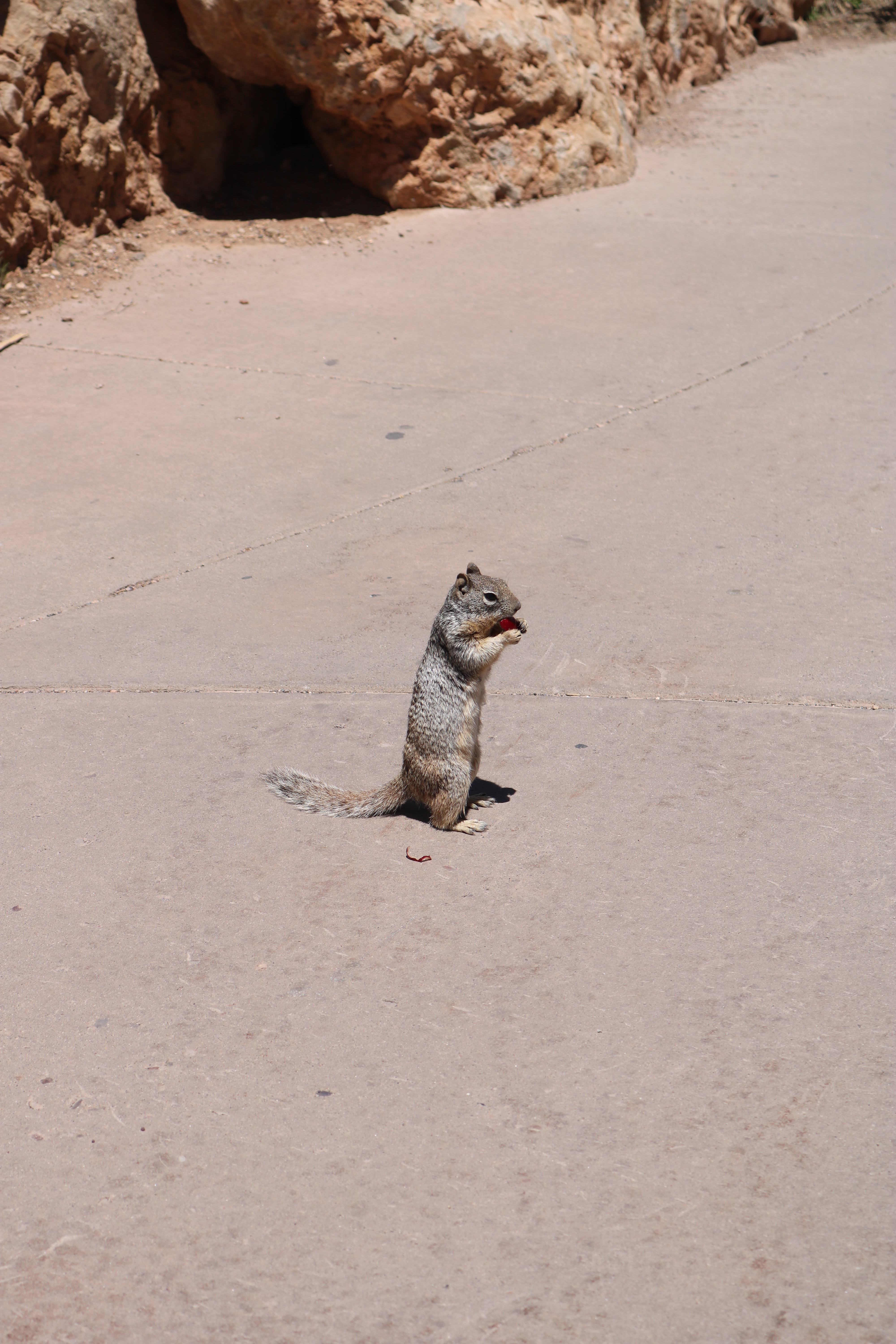
Rock Squirrel being fed by visitors at Grand Canyon National Park in Arizona. Credit: Lindsay
On a recent trip to the Grand Canyon, I noticed almost immediately that someone was pulling food out of their bag and started feeding this squirrel. Not only is this irresponsible, it is also illegal. There were multiple signs posted stating to not feed the wildlife and for good reason.
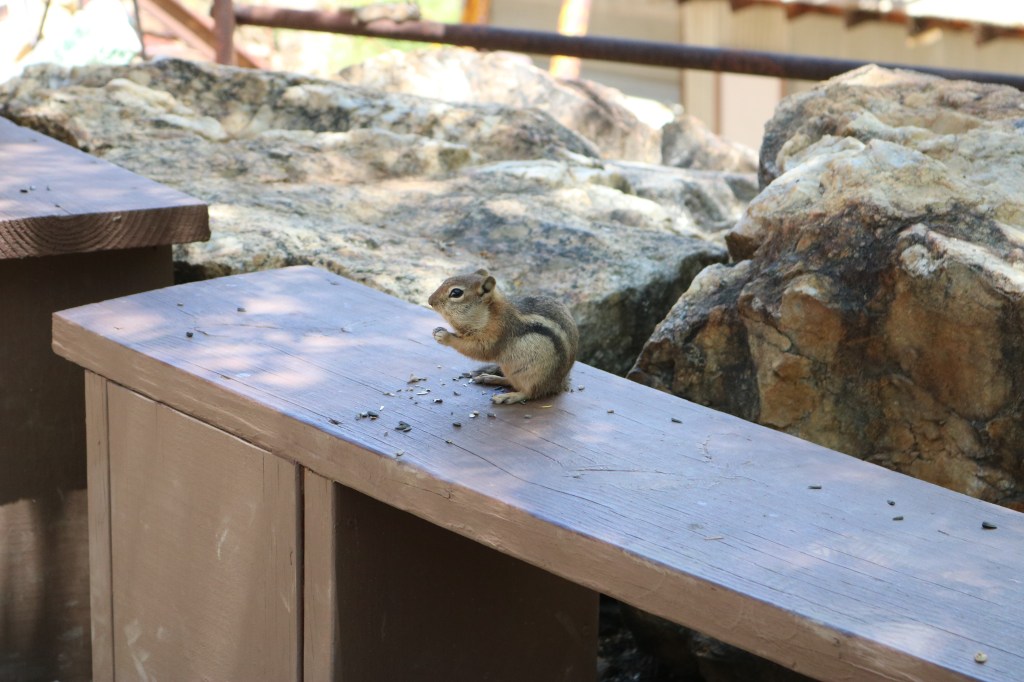
Why should you not feed wildlife and what are the consequences?
- Public Health Concerns. Feeding wildlife poses a health risk to you of being bitten and/or disease transmission. You may need expensive medical care for the treatment of an animal bite and/or exposure to potential illnesses. Rabies, Tuberculosis, Plague, and Hantavirus are some examples of transmissible illnesses from wildlife to humans.
- Human Foods Aren’t Healthy for Wildlife. Human foods don’t have the right vitamins and minerals that wildlife need to survive. We have very different diets and nutritional needs from many wildlife, making human foods an unsafe option.
- Animals Will Start Expecting Food From People. If an animal has been continuously fed by humans, they will start going up to humans expecting food. This can turn into aggressive behavior from the animal when humans do not give this animal food. They basically lose their fear of people, which is not a good thing in a wild animal.
- Animals Won’t Know How to Find Food. When animals are fed by humans, over time they will likely struggle to find food on their own in the wild. This poses huge risks to them and their survival.
Feeding wildlife, despite its good intentions, often leads to unintended negative consequences. It disrupts natural foraging behaviors, promotes dependency on humans, and can result in poor nutrition. For the well-being of wildlife and the preservation of our ecosystems, it is crucial to appreciate and respect animals from a distance, allowing them to maintain their natural behaviors and habitats undisturbed.
 Action Fauna Blog
Leave a comment