

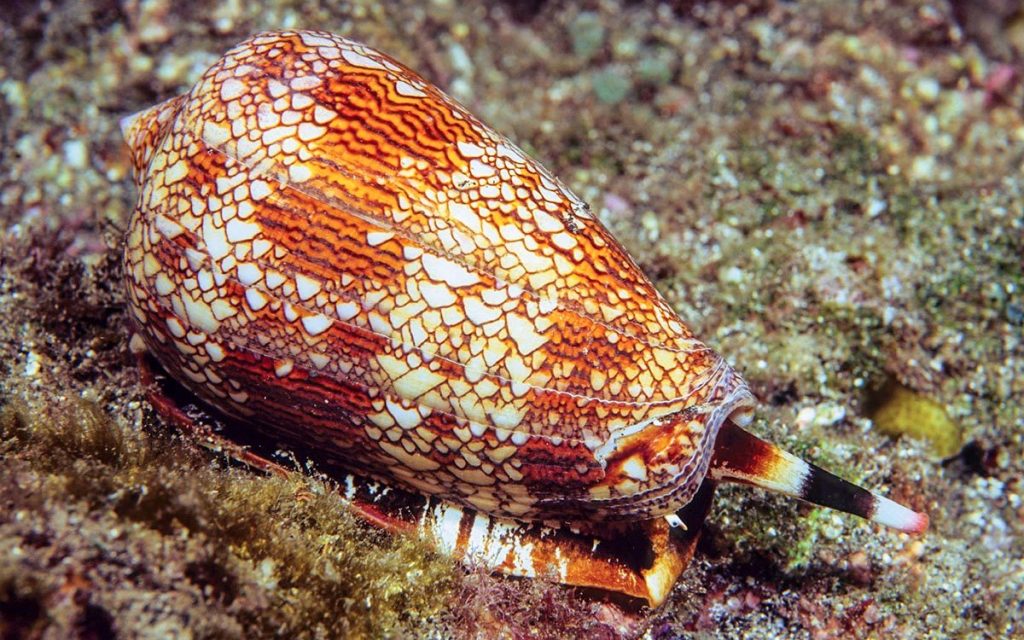
Cone snails are a venomous sea snail. I know they look innocent, but trust me these guys have the ability to kill you. Cone snails are carnivores and primarily eat small fish, worms, and even other cone snails.
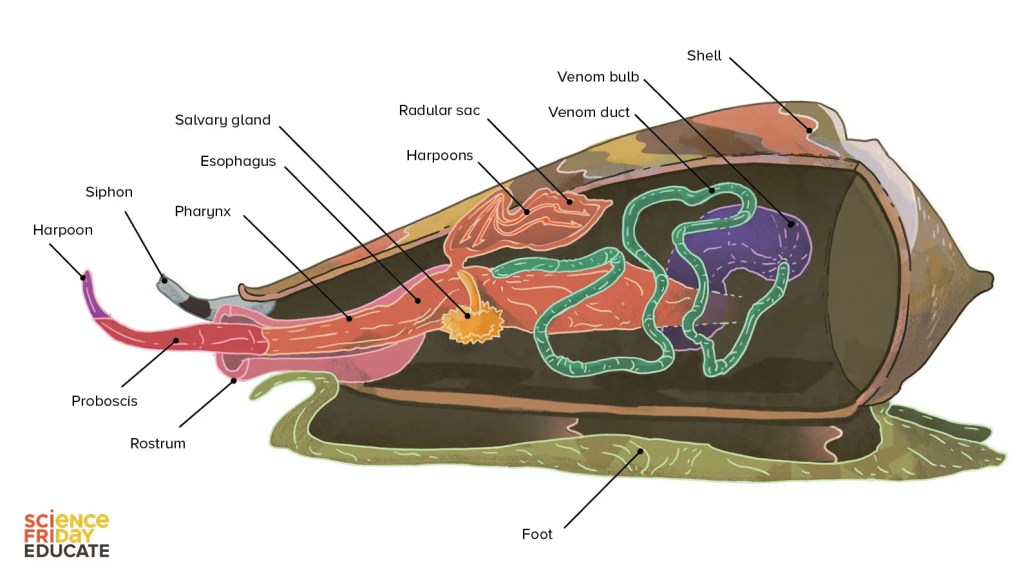
Cone Snail Anatomy: First, let’s go over some basic anatomy. The proboscis has the ability to stretch out pretty far. The harpoon, which is at the tip of the proboscis is coated with venom to sting its prey. The venom bulb helps pump venom through the venom duct, which goes into the harpoon. The rostrum is like a mouth and this is what envelops prey.
Below is a video of a cone snail hunting and eating prey. The video will give you a good idea of how cone snails hunt and eat in the wild and help you understand the anatomy that you read about above.
Where do cone snails live? They live in the sand of fairly shallow waters, usually close to coral reefs. Click here to read my other blog post about the importance of coral reefs and to understand why the cone snail lives close by. They are typically found in the Pacific and Indian Oceans, but also in southern Australia, Great Barrier Reef, Hawaii, and California.
So, how can cone snails kill you? Cone snails usually sting humans due to humans picking them up, not knowing that they are dangerous or by accidentally stepping on them. It’s important to note that cone snails do not seek out humans to sting them. The toxin affects the nervous system, which can lead to paralysis, respiratory failure, and ultimately death. Other symptoms may include: intense pain, numbness, swelling, and tingling. There is no anti-venom and treatments are focused on symptom management. If you’ve been stung, it is advised to seek medical attention immediately. It is estimated that less than 100 people have died from cone snail stings.
The moral of the story is, don’t touch anything in the ocean.
 Action Fauna Blog
Leave a comment