

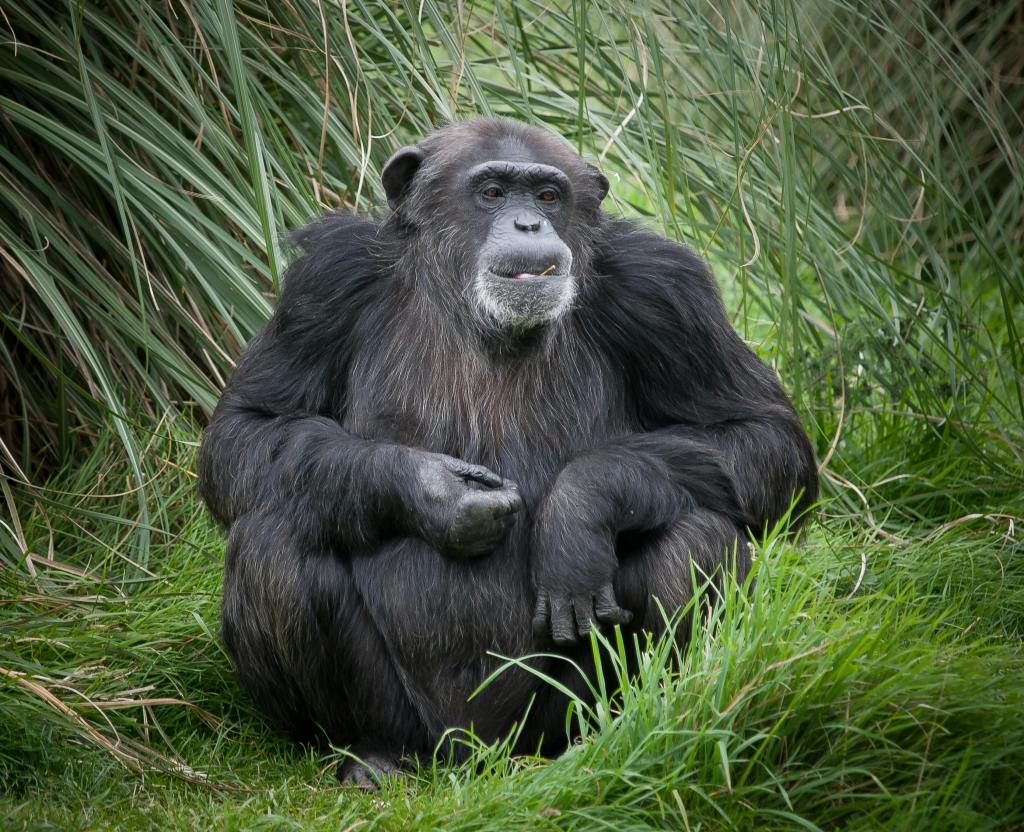
Chimpanzees are native to Africa where they face several threats impacting their populations and survival. Some of these threats include: climate change, habitat loss, illegal pet trade, & illegal hunting. Chimpanzees are often hunted for their meat (also called bushmeat) by people living in the local community. I want to make it incredibly clear that this hunting is considered illegal by federal laws and Chimpanzees are a protected species under these laws, in Africa.
Why are Chimps being hunted for their meat? One reason is that their meat is considered a delicacy in these cultures. Usually, these chimps are hunted, killed, and then sold as bushmeat. This also provides the hunter with a financial gain, so many hunters do this for a living.
Why is this problematic? Chimpanzees are currently listed as endangered, which means their populations have declined. Another issue is the low reproduction rate in Chimps. Chimps usually give birth about every 3-6 years. Due to the low reproduction rate of chimps, it takes longer to help replenish the population, coupled with the fact that they are already endangered makes for a grave scenario that could lead to them being critically endangered in the coming years if more action is not taken.
What are we doing now to help with illegal hunting? In Africa, there are rangers that help survey areas where chimps live for illegal activity, like hunting. Additionally, there are conservation groups trying to help manage protected areas, where chimps live, like Kibale National Park in Uganda.
(In my opinion) What can we do (now/in the future) to help with minimize or eliminate illegal hunting? There’s a few things I think we need to do in order to help conserve chimps.
- Strengthen law enforcement and punishments: From the research I have read, there seems to be little enforcement of these laws and consequences for breaking the law. I think changing this may have a positive effect on illegal hunting. Think about it, if it is illegal to hunt chimps, but I hunt one anyway and get away with it, I have now learned that there is no consequence for my actions and am way more likely to continue hunting chimps, despite it being illegal. In order to increase law enforcement though, the communities would need more money to be able to enforce this and this is a barrier due to lack of funding.
- Educate & Engage local communities (Community Conservation): Educating the local communities is vital if we want illegal hunting to end. Without educating the local communities, the behavior will likely never end and will probably get worse over time. If the local communities understand why the illegal hunting is a problem, they would be more likely to stop the behavior. There are still outliers here (individuals that will never stop illegally hunting chimps despite understanding the consequences to the chimp communities) and I don’t think we will ever be able to fully eliminate illegal hunting, but I think we can at least significantly lower it with education. For individuals that illegally hunt chimps for a living, we (the government or a conservation agency) should offer them some other job alternative that will make the same amount of money. This way they would more likely to make the switch from illegally hunting to another, safer job. The other piece to this is community conservation and engagement. I’m a big supporter of community conservation and I truly believe if the communities are involved in helping to conserve these chimps, we would have better outcomes, especially in terms of illegal hunting.
- Eco-Tourism: I don’t just mean ecotourism with African citizens, I mean worldwide ecotourism, meaning people from all over the world travel to Africa to see and visit chimps in their natural habitat. We are actually already doing this, and I think continuing it would be a great idea as it helps educate these people on the threats facing chimp populations, including illegal hunting.
- Hire more park rangers to help survey the areas that chimps live in: Currently, park rangers are already surveying these protected areas that chimps live in and preventing illegal hunting activity, as well as monitoring the area. Given the large size of these protected areas, I think we should expand to hire more park rangers so that they can continuously survey the area, day and night. Obviously, this costs money, which we talked about earlier is a barrier. If these organizations had more funding and grant money, it could be achievable.
- Continue to conserve protected areas where chimps live: Conservation organizations are already helping to do this, but it is an important piece. By continuing to conserve the area that chimps live in, we can help give chimps a safer place to live that would require more people on the ground, which would probably act as a deterrent to illegal hunters.
- Do more research in this area: More research definitely needs to be done in terms of, what really drives people to illegally hunt chimps? Is it just for money or is it because the meat is a delicacy? What could be effective deterrents to illegal hunting? Would putting up signs in areas that are known to illegally hunting chimps explaining that hunting chimps is illegal be effective? These are all questions that I think need to be answered in order to help us move forward on this issue.
What can YOU do to help? Educate yourself and educate others. This may look like reading books and research articles and having conservations with your friends and families. It could also look like watching documentaries and “going down the rabbit hole” on Google. It could also be that you choose this topic of a similar topic for a school project and you get to present your project in front of your peers to help educate them on this topic. There’s a plethora of ways to you can do to educate yourself and others. I encourage you to find what interests you and works for you and do that, so we can all work to help limit illegal hunting and help conserve endangered chimpanzees.
 Action Fauna Blog
Leave a comment