

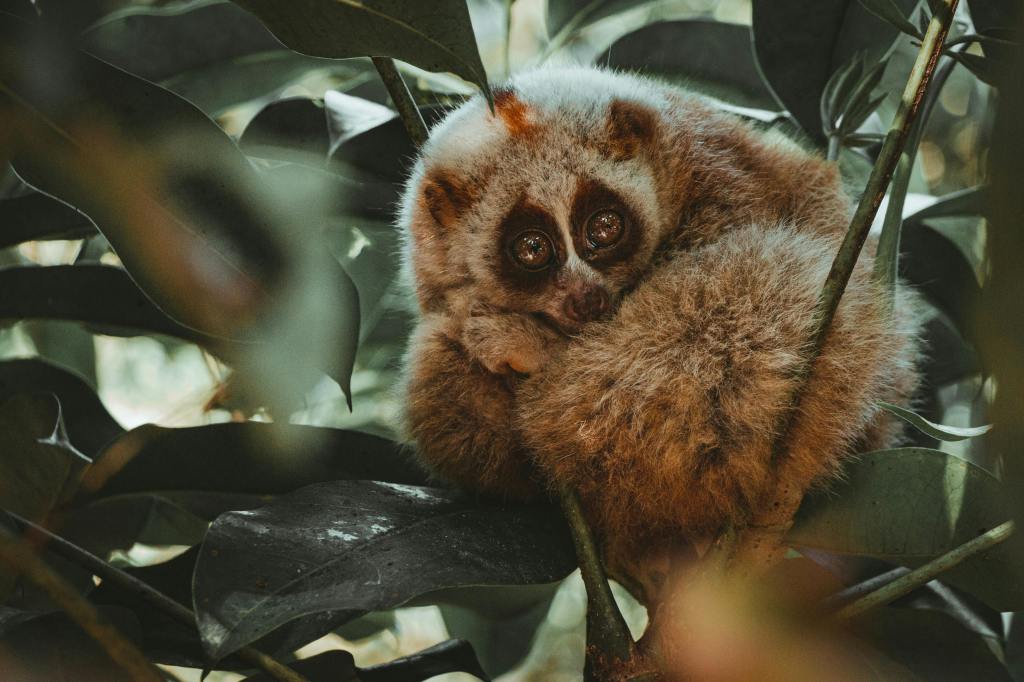
What is the Slow Loris? The Slow Loris is the only venomous primate on Earth and one of the few venomous mammals on Earth. They are nocturnal. Their diet consists of fruit, nectar, small mammals, small birds, insects, small reptiles, and tree sap.
Where does the Slow Loris live? There are 9 different species and they live throughout South and Southeast Asia. They are arboreal and prefer living in forests.
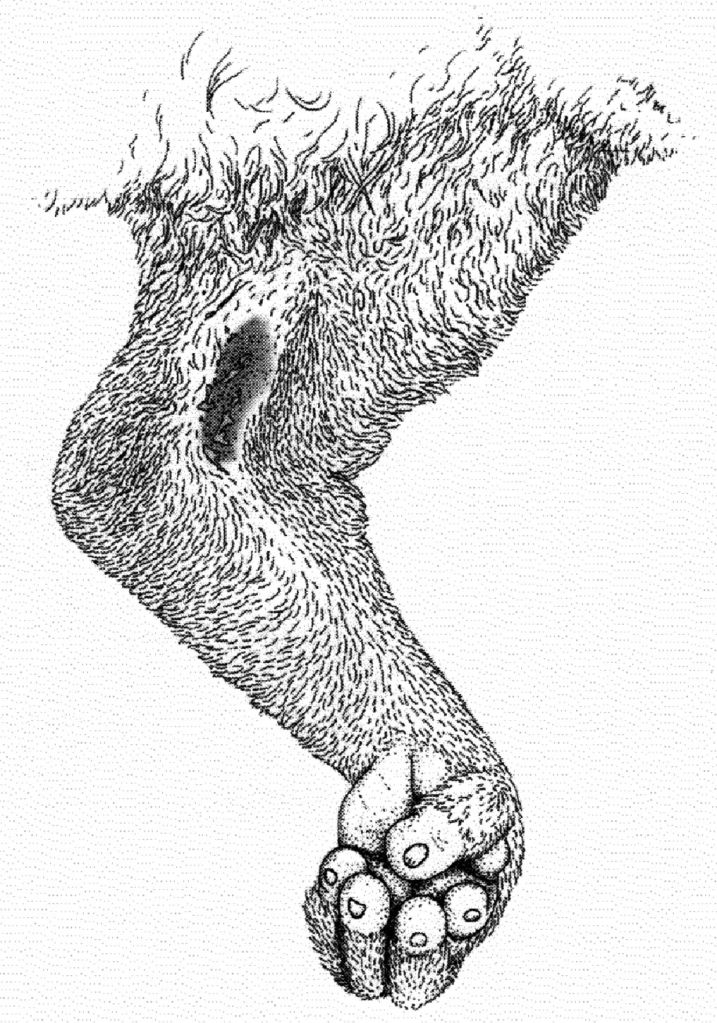
How does the Slow Loris use their venom and how can this affect humans and other animals? Their venom delivery system is nothing short of unique. They have a gland in their upper arm that secretes venom to that localized area, called ‘Brachial Gland Exudate’. When threatened, they will raise their arms over their head, which allows the venom to be secreted by the gland (which is a bare spot on the upper arm with no fur), they will then lick the area, which allows the venom into their saliva, which can be spread through a bite. In the image above, it shows an example of the brachial gland. The dark area is where there is no fur and where the brachial gland exudate is excreted and then licked by the Slow Loris. Their venom can cause anaphylaxis and even death in humans. They can also use their venom on other animals and mammals, but they also occasionally use it on other slow lorises, mostly as a defense mechanism. The bite can be painful in humans and cause a myriad of symptoms including: pain, swelling, hypotension, & seizures. As mentioned previously, anaphylactic shock and death can occur with a bite from a slow loris. It is unknown how many people are bitten by slow lorises each year.
Is there any anti-venom available? There is no anti-venom for slow loris bites. The medical treatment for a slow loris bite is supportive care.
Why is the Slow Loris essential to their ecosystem? Slow lorises are very important for seed dispersal. They eat lots of fruit and the seeds that they defecate out contribute to the spread of seeds, which is important to the environment and ecosystem. They are also important for keeping insect populations in balance since insects are a part of their diet. Basically, they help by preventing insect populations from growing out of control.
What is the Conservation status of the Slow Loris? All 9 species of slow loris are experiencing decreasing populations. These decreasing populations are the result of habitat loss, logging, and illegal pet trade.
The Slow Loris species that are vulnerable include: Philippine Slow Loris, Kayan Slow Loris, & Bornean Slow Loris.
The Slow Loris species that are endangered include: Bengal Slow Loris, Greater Slow Loris, Pygmy Slow Loris, & Sumatran Slow Loris.
The Slow Loris species that are critically endangered include: Bangka Slow Loris & Javan Slow Loris.
Let me know in the comments what you learned!
 Action Fauna Blog
Leave a comment